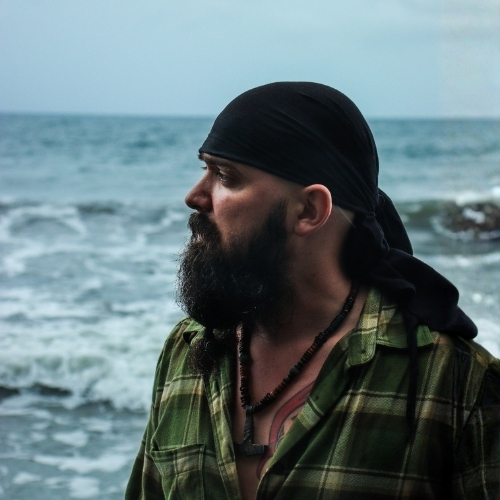
Comrades, our projects to protect wildlife are becoming increasingly fundamental, and we continue to expand our independent infrastructure. We would have accomplished many things long ago if not for the pressure and chaos around us — we previously had to abandon expeditions, and many things became impossible to do.
Recently, major media outlets, official responses from agencies to public appeals against the destruction of the Russian Taiga, and several publications by prominent media figures have claimed that there are no problems in Russia's forests and that the taiga is, on the contrary, 'expanding and growing.' This information was picked up by the public, and now any attempts, even by the scientific community, to speak out against forest destruction are met with thousands of comments: 'You don't understand anything, the taiga is only growing.'
That's why I previously prepared and published a series of materials with a detailed analysis of the problem: the increase in forest area is observed on satellite maps due to the advent of modern technologies that allow for more accurate accounting. Such technologies simply did not exist before. Moreover, this concerns the emergence of young tree and shrub vegetation in tundra zones due to climate changes and the overgrowth of agricultural fields.
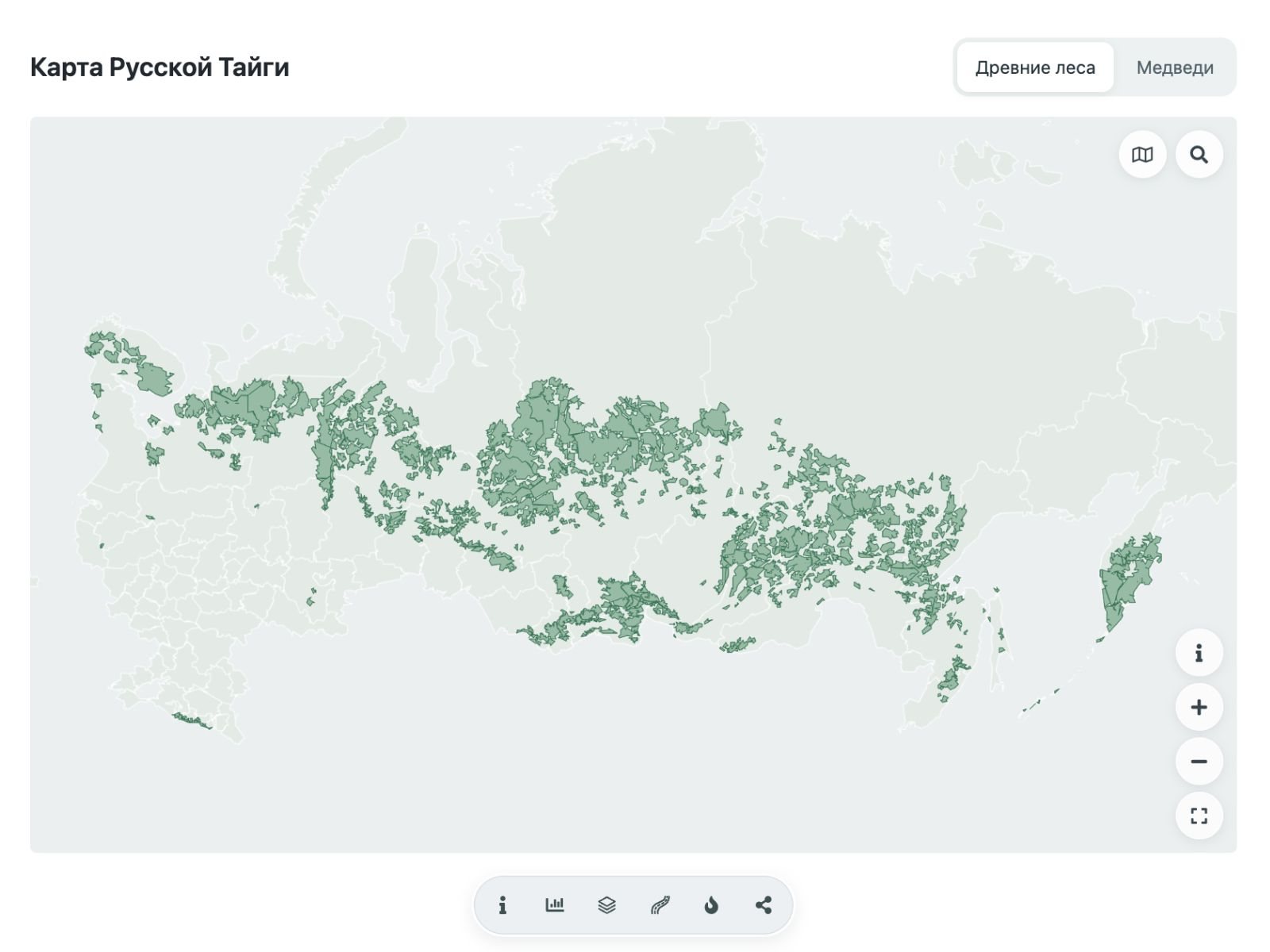
Meanwhile, the true ancient Russian Taiga is being destroyed — old-growth, minimally disturbed forest areas whose ecosystems have formed over thousands of years.
But with such a simple manipulation, real problems were merely brushed aside, shifting society's focus to distorted data. The shift of the taiga's "fringe" into the tundra zone or the overgrowth of abandoned agricultural fields with "mordakhlust" does not solve the problem of the destruction of the true Russian Taiga with its complex biogeocenoses.
So, comrades!
Today, I am announcing the launch of a new project based on our activities in nature conservation — an independent analytical service called "Russian Taiga," which will now operate on a permanent basis as a research center studying the problem of the destruction of Russia's minimally disturbed forest areas.
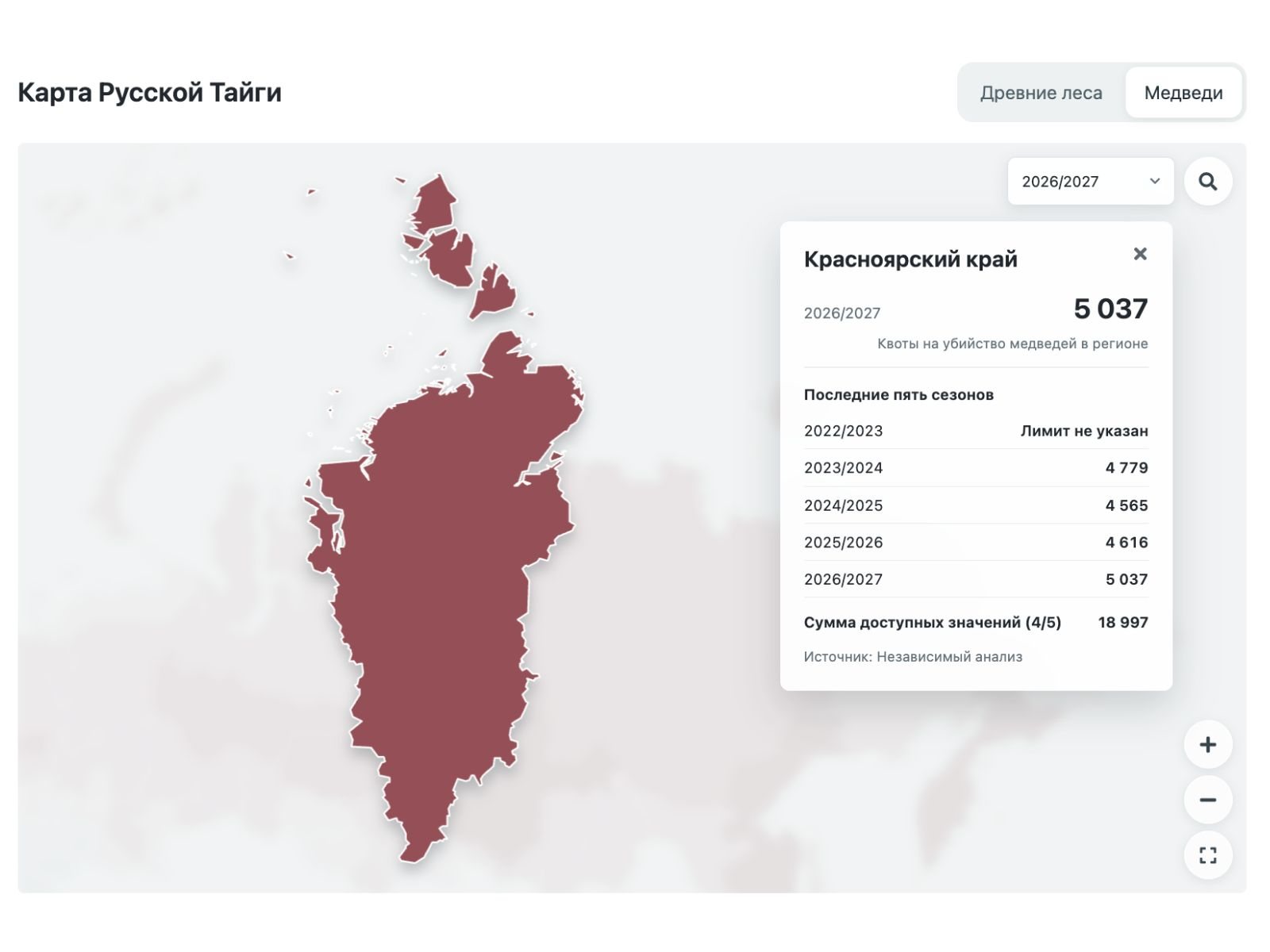
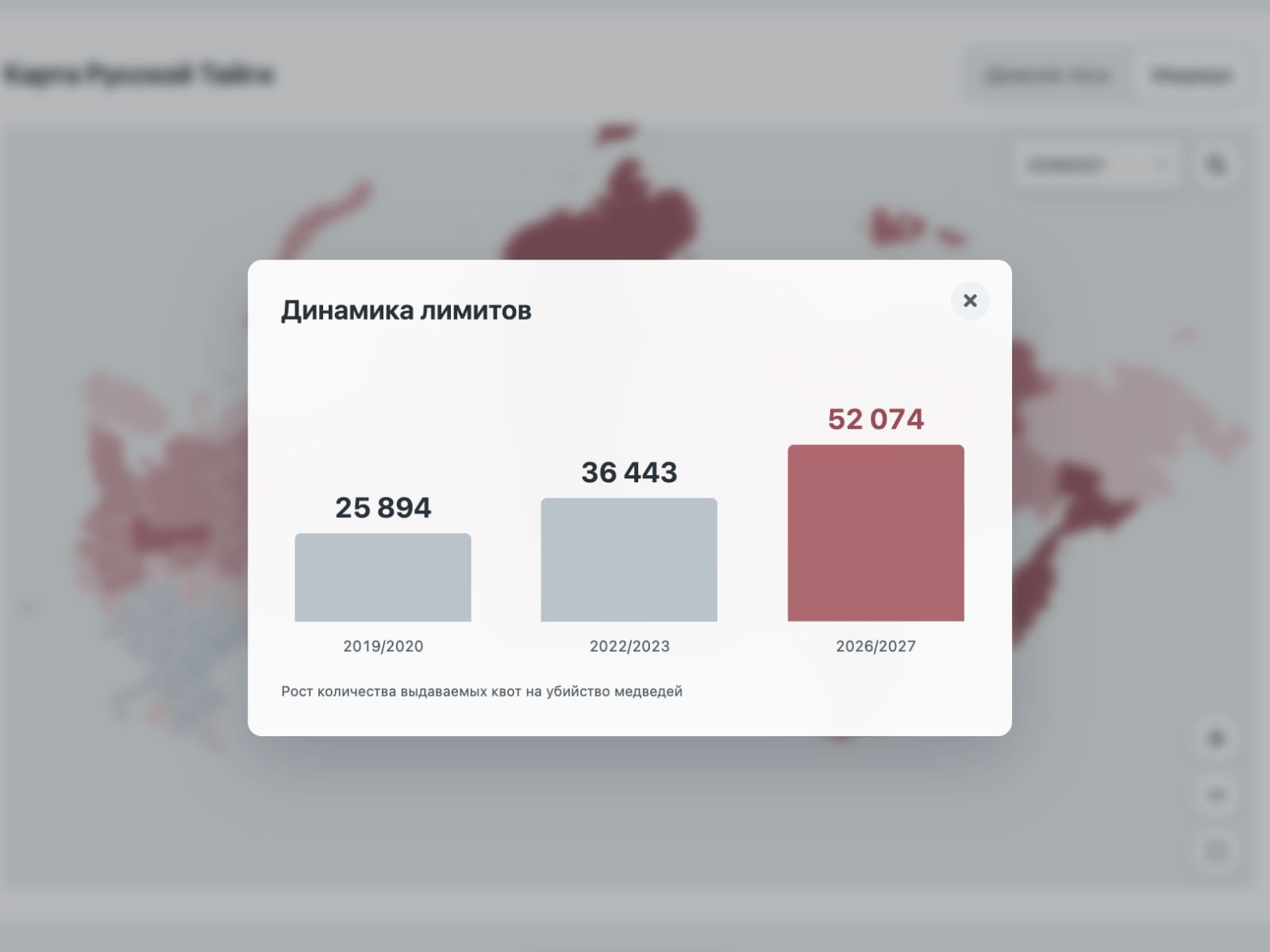
Previously, we launched a registry of quotas for bear hunting. Let me remind you that there are plans to kill even more bears now (without limits and restrictions), to hunt them during winter hibernation in their dens, and they have even started paying bounties for each bear killed in some regions of the country. Now this registry is combined with the "Russian Taiga" analytical service.
If bears are increasingly approaching humans, and there is no reliable data on their actual numbers today, and all we are offered is the mass killing of these creatures, then it is reasonable to ask: could the bears' approach to humans be linked to serious problems within the wild?
I believe it is definitely connected. But today, everyone seems to have a primitive, illusory understanding of the world around us! To the point of paradoxes, where we are officially told: "There are 300,000 bears in the country," and then: "But the actual number is unknown." And then they conclude: "But don't worry, because there is no forest destruction either, the taiga is growing and expanding."
Don't you find this strange and extremely dubious, comrades?
In our fight for nature, we must be objective. We need to rely on strictly scientific data, and everything we call upon the government system, the hunting community, and everyone else to do is to evaluate deeply systemic problems in a similarly deep and systematic way. We must not ignore scientists, conduct environmental assessments, research, and scientifically justify any intervention in complex biological systems.
Agree, it would be unreasonable if a patient's body were to be cut not by experienced surgeons in medical facilities with modern equipment, but by groups of people with a 'subjective opinion' on what needs to be done, throwing the patient's body onto a dirty floor covered with oilcloth?
So how is this different from the intervention of groups interested in the commercial exploitation of wild nature in complex biological systems with millions of feedback loops that have formed over thousands of years, saying: 'In our subjective view, we need to cut here'?
Any approach must be justified by science, by independent work of scientists who understand what they are doing and why. And who are inherently not interested in commercial profit, in a piece of the flesh of our much-suffering Russian Taiga.
Russian Taiga
The analytical center of the 'Russian Taiga' project has been launched and is available from today, free and open to everyone. We will expand it, compile more data and research, and develop the infrastructure.
Currently, our center offers two modes: the state of ancient (undisturbed) forests of Russia, and the pressure on the bear population across the entire country.
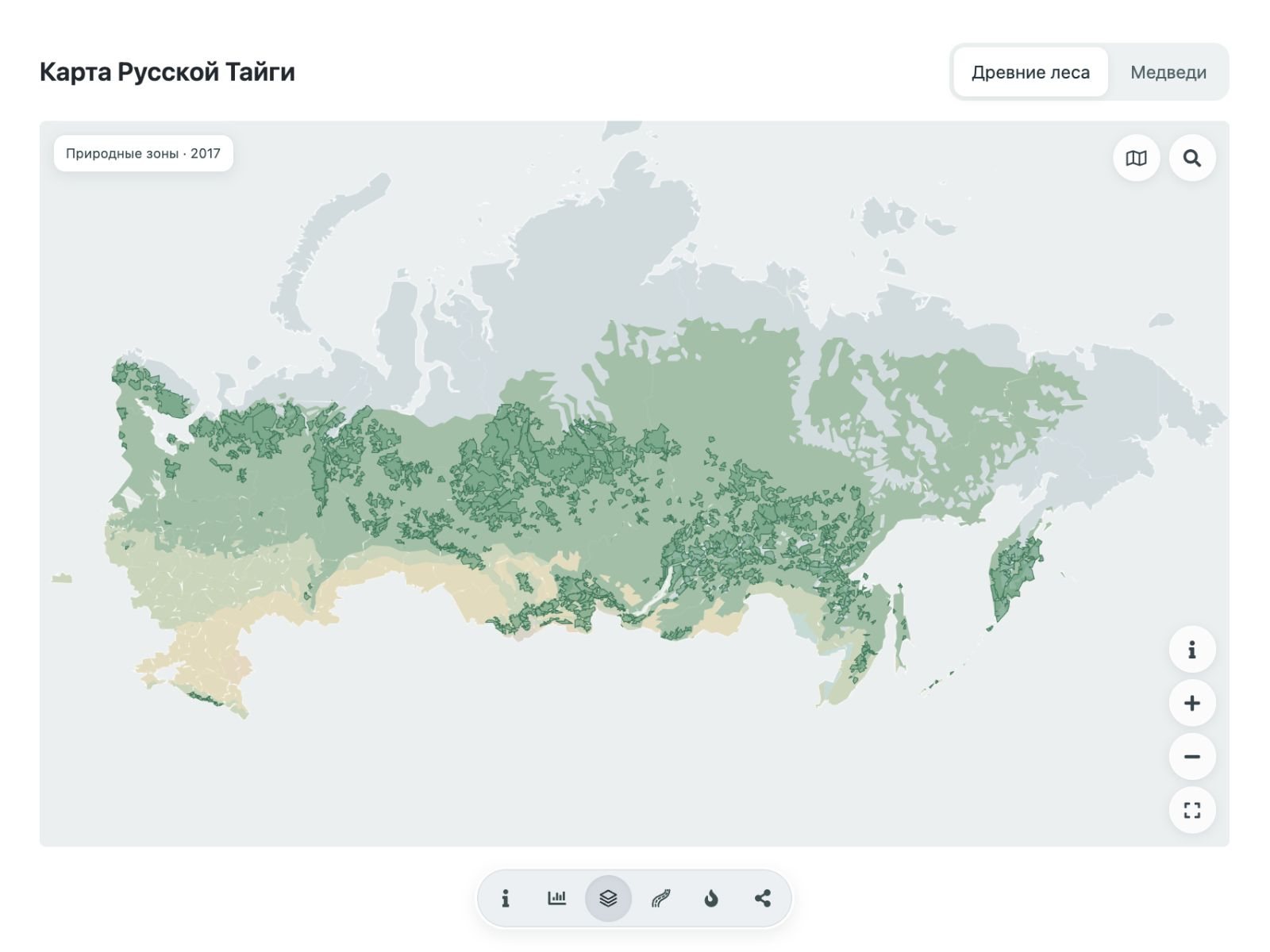
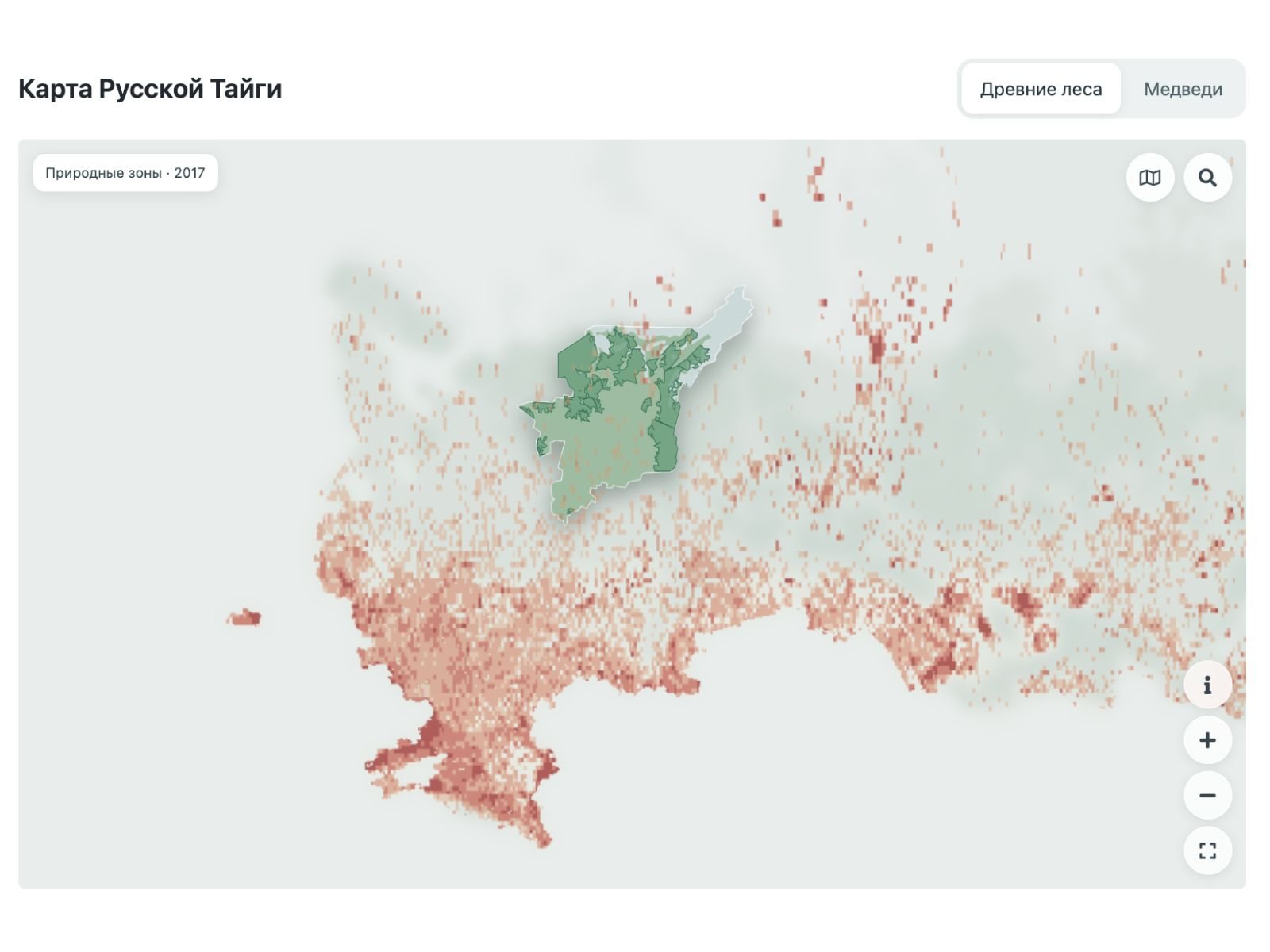
The bear, as a large territorial predator, requires intact wilderness areas. If these areas are fragmented, isolated, or destroyed, it is natural that, having lost their habitat and food sources, bears will begin to encounter humans, approach settlements, and thus dangerous conflicts will arise.
At our analytical center, we have launched interactive maps where you can now visually see, based on scientific data from studied research, what the remaining areas of minimally disturbed forests look like, how much of them we have left, and how the length of roads cutting through the wilderness has increased. Additionally, we have compiled data on forest fires over recent years and displayed them on an interactive map. Now they can be overlaid on minimally disturbed forests to assess the scale.
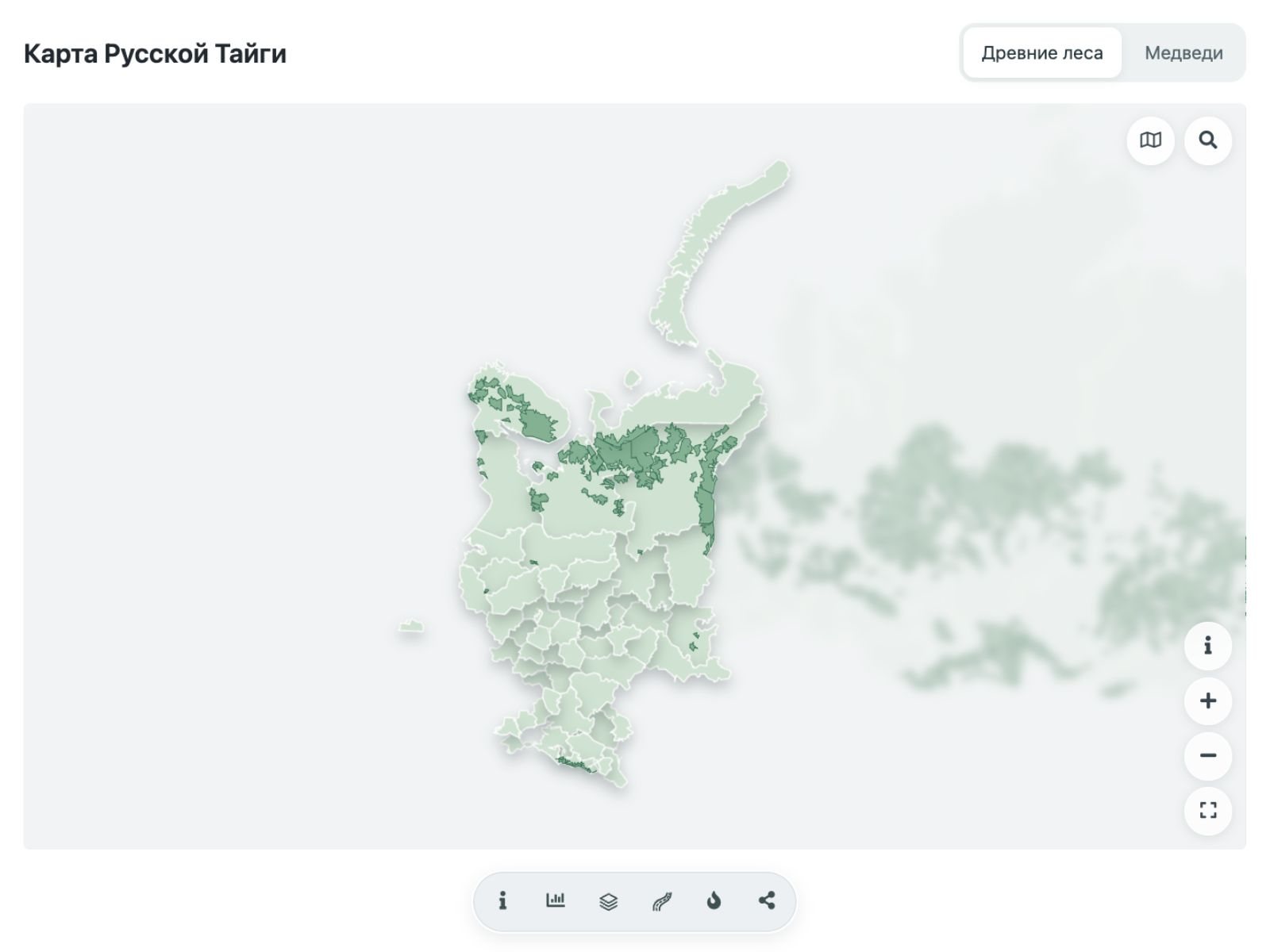
Here are some brief facts from our analytical center:
Since 2001, the area of forests in Russia has increased by 49.77 million hectares (+6.7%) according to satellite monitoring data. At the same time, the area of minimally disturbed forest territories has decreased by 53.2 million hectares (−19.4%). Within these territories, a loss of tree cover of approximately 25 million hectares has been recorded.
During the same period, from 2001 to 2025, satellite monitoring recorded a total loss of tree cover in Russia of approximately 92 million hectares. This area is larger than the territory of Turkey. The main causes include fires and logging. These areas are accounted for as forest zones, but in fact, the tree cover on them has been lost.
The taiga has been fragmented and its sections isolated from each other. From 2000 to 2023, the net increase in the road network in the studied area of Central and Eastern Siberia was almost 103,000 kilometers. The study covered only 5.81 million km² of Siberian territories, but the figures are already catastrophic.
At the same time, the number of ancient forest fragments has increased by 4.3 times (!!). In the studied areas of Siberia, the average size of an intact forest fragment has decreased from 4,460 to 1,038 km² — a reduction of 76.7%. Continuous ecosystems are turning into isolated patches.
In the studied territory of Siberia alone, fires have swept through 107.57 million hectares of wilderness in recent years. This area is larger than Egypt.
Nearly half of the identified fires are near roads and logging sites. Research in the Angara region from 2002 to 2020 showed that almost half of the detected fires occurred within 2 km of roads, settlements, and logging areas. The fire affected about 4.1 million hectares of the studied territory.
- At the same time, cedar forests are being destroyed on a colossal scale. In the studied area of the Far East, scientists found that even 60–70 years after selective logging, the native Korean pine-broadleaf forests have not been able to recover. The stock of Korean pine remained almost nine times lower than in old-growth forests.
This is the scale of the problem.
We are beginning a major research effort, compiling scientific data to fill information gaps and provide society with a comprehensive interactive system for analyzing the real scale of the destruction of the Russian Taiga.
I remind all comrades that our work is conducted entirely by our own efforts, without commerce, without advertising, without any lobbying of government or business interests. We are practically the only ones who do not associate the Mission of protecting wildlife with personal gain—only a sincere desire to change the world for the better.
The analytical service of the 'Russian Taiga' project will be refined and improved. We are beginning preparations for a long and thorough effort to study the deeply systemic problems of Russia's ancient forests.
Help! And fight for Life!
© PAVEL PASHKOV
Support the fight!
The hardest thing in our time is to remain independent from government and business! All activities are carried out independently. Stand with us and support our Mission to protect wildlife.
I want to support!Get involved
On an ongoing basis, we launch public initiatives together to protect wildlife and achieve real change. Join this work and help change the world for the better.
Explore the initiativesTFET Concept
We are working to transform the global protected-area system — Territories of Full Ecological Tranquility (TFET) must be created. Wildlife needs refuges from human pressure! This is one of the key paths out of the planetary ecological crisis and toward preventing further ecosystem collapse.
Learn more